
The Role of Pumice Stone in Landscape Applications
The lightness of pumice not only provides ease of transportation and application in landscape projects, but also plays a critical role in applications where structural load restrictions are present, such as green roofs, terrace gardens and vertical gardens, which are increasingly important in urban areas. While traditional soil and aggregates may be too heavy for such applications, the use of pumice allows deeper growing environments, a wider variety of plants to be used, and thus the quantity and quality of green areas in urban landscapes can be increased. This also contributes to ecosystem services such as reducing the urban heat island effect, supporting biodiversity and rainwater management.
Physical Properties
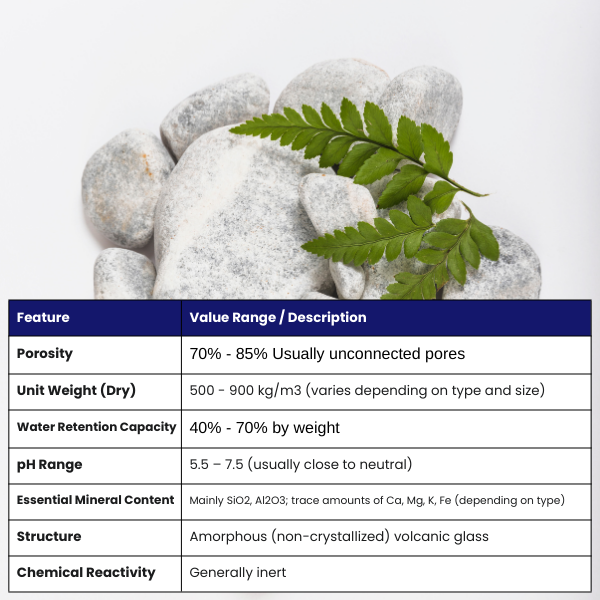
The fact that the pores of pumice are generally not connected to each other prevents water from suddenly flowing away from the soil or growing medium, providing longer-term and balanced moisture retention. Each pore acts like a small water reservoir that plant roots can access. This makes pumice a valuable material, especially in arid and semiarid regions where water resources are limited or in sustainable landscape projects where water conservation is a priority. The reduction in the need for irrigation contributes to both the conservation of water resources and the reduction of maintenance costs.
Chemical Properties
Pumice is generally chemically inert, meaning it will not react undesirably with soil or other growing medium components. Its pH is generally neutral or near neutral (typically between 5.5 and 7.5), making it a suitable choice for most plant species. Its primary chemical composition is silicon dioxide (SiO 2 ) and aluminum oxide (Al 2 O 3 ). However, some types of pumice, especially those with basic characteristics, may contain trace minerals such as Calcium (Ca), Magnesium (Mg), Potassium (K), and Iron (Fe) that are beneficial to plant growth, and can slowly release these into the soil.
Pumice Sizes and Application Areas Used in Landscape
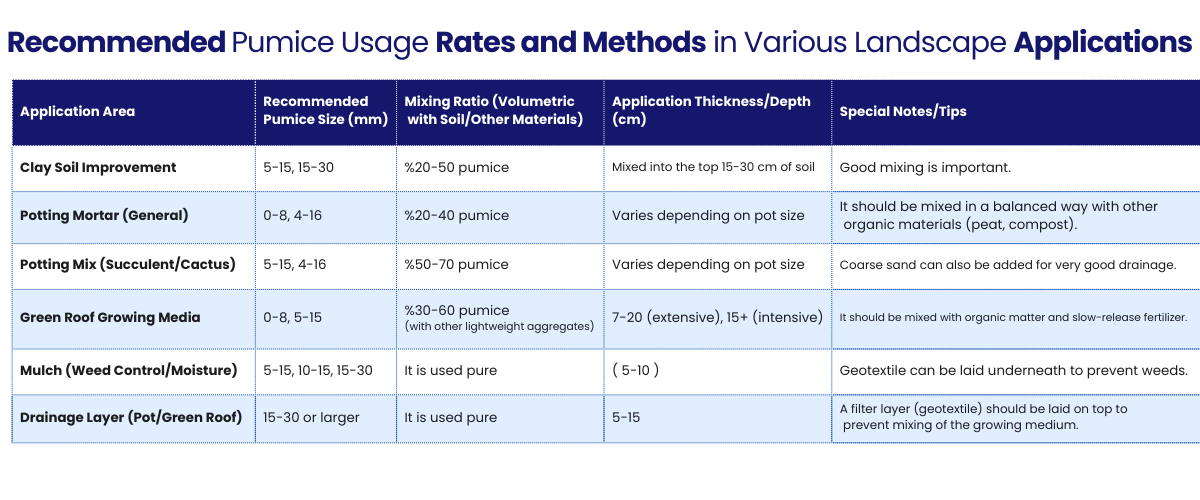
Pumice stone is used in a wide range of grain sizes in landscaping applications. These sizes are selected according to the purpose of the application and the intended benefit. Common size ranges include fractions such as 0-5 mm, 1-2 cm, 4-8 mm, 5-15 mm, 10-15 mm and 15-30 mm.
The existence of different particle sizes allows pumice to be used in a targeted and optimized way in the landscape. According to the principles of soil physics, smaller particles offer more surface area and smaller pores, increasing water retention, while larger particles create larger pores, maximizing drainage and aeration. This shows that pumice is a versatile material that can be adapted to different landscape scenarios (e.g. fine particles for sensitive seed beds, coarse particles for drainage layers where water needs to be removed quickly). Contrary to the notion of “one type of pumice”, choosing the right particle size directly affects the success of the application and plant health.
Fine Grained Pumice (e.g. 0-5 mm, 0-8 mm):
These sizes are often used as fine aggregates in seed germination media, potting mixes, and general soil amendments. Fine grains increase water retention capacity and root contact.
Medium Grain Pumice (e.g. 4-16 mm, 5-15 mm):
It is preferred in general purpose potting mixes, to improve drainage and aeration in plant beds and as a decorative mulch material.
Coarse Pumice (e.g. 15-30 mm, 1-2 cm):
It is particularly ideal for creating a drainage layer at the base of pots and plant beds, for drainage in green roof systems and for larger-scale decorative mulching applications.
Basic Usage Areas and Application Methods of Pumice Stone in Landscape
Examples of stonewashed jeans in different tones: Washing with pumice stone creates distressed patterns on the fabric, each with a different patina. These effects give jeans a unique and fashionable vintage look. Washing with pumice stone provides many advantages to denim fabric. First of all, the grinding process softens the fabric and increases its flexibility; as a result, the jeans feel more comfortable. Secondly, the faded and uneven color transitions obtained with the abrasive effect of pumice stones offer a stylish vintage aesthetic. Pumice stones remove some of the dye by abrading the fabric surface like sandpaper, thus creating a natural worn effect on each piece. Moreover, since pumice is a natural material, less harmful chemical waste is produced compared to chemical-based washing methods. With this method, the abrasion patterns formed on the surface of the jeans are unique in each product and give the brand a unique look.
Pumice in Decorative Landscape Applications
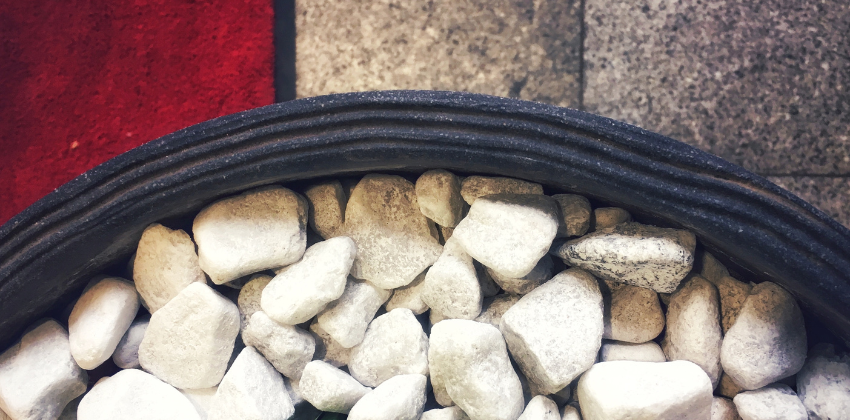
Use and Benefits as Mulch (Weed control, moisture preservation) Pumice stone can be used as an aesthetic mulch material in the landscape thanks to its availability in different colors (white, black, brown, red) and sizes. It is laid at the base of plants, in flower beds or under trees, both preserving the moisture of the soil and significantly suppressing weed growth by blocking sunlight. It also balances the surface temperature of the soil, preventing the roots from overheating or cooling.
Walkways and Floor Coverings Pumice is a preferred material for garden paths, pathways and other floor coverings with its natural and aesthetic appearance. Its lightness provides ease of application. Original designs can be created by using pumice in different colors and sizes. Providing good drainage, it also prevents the formation of puddles after rain.
Rock Gardens and Other Aesthetic Uses Pumice is used as a natural and striking element in special landscape designs such as rock gardens, succulent and cactus arrangements. Pumice stones of different sizes and colors allow aesthetic compositions to be created by combining them with plants and other natural stones. It can also be used around water elements or in pot top decoration.
Using Pumice in Vertical Gardens
Providing Light Growing Environment Vertical gardens are a popular solution for creating green tissue in limited areas, especially in urban areas. The lightness of the growing medium used in these systems is important in reducing the load on the carrier structure. Pumice is preferred as a growing medium component in vertical garden modules due to its lightness and good drainage.
Use of Pumice on Green Roofs
Its Role as a Lightweight Filling Material Green roofs are important landscaping applications that add ecological and aesthetic value to urban areas. However, since the bearing capacity of roofs is limited, it is critical that the growing medium and drainage materials to be used are lightweight. Pumice is an ideal solution as a lightweight aggregate in green roof systems, both in the drainage layer and in growing medium mixtures, thanks to its low unit weight. In this way, the load on the roof is reduced and a suitable development environment for plants is provided.
Contribution to Drainage and Water Management An effective drainage system on green roofs is vital for the rapid removal of excess water and to prevent plant roots from drowning. Pumice, with its coarse fractions, is used in the drainage layer to allow water to flow freely. At the same time, thanks to its porous structure, it helps meet the water needs of plants during dry periods by retaining some moisture, thus contributing positively to the water management of green roofs.
Pumice as a Soil Improver
Improvement of Soil Structure (Aeration, Drainage, Prevention of Compaction) Pumice stone creates miraculous effects especially in heavy and clayey soils thanks to its porous structure. When mixed into the soil, it prevents the soil from compacting, increases the aeration capacity and allows water to drain more easily. This allows plant roots to receive more oxygen and develop healthily.
Water Retention Capacity and Its Effect on Irrigation Efficiency Pumice has the capacity to retain water equal to a significant portion of its own weight; this rate can vary between 40% and 70%. By gradually releasing this retained water to the plant roots over time, it significantly reduces the need for irrigation and contributes to water conservation. It also reduces the loss of water in the soil through evaporation.
Contribution to Nutrient Management The porous structure of pumice prevents nutrients in the soil from being washed away and helps to keep them in a way that plants can benefit from. This allows for more efficient use of fertilizers and therefore fertilizer savings. Especially basic pumice can provide long-term contributions to plant nutrition by slowly releasing minerals such as Calcium, Magnesium, Potassium and Iron into the soil.
Application Methods and Mixing Ratios Pumice is usually applied by mixing it directly into the soil. Common methods include spreading and mixing it into the soil before planting seeds or adding it to the seedling planting holes. Mixing ratios vary depending on the existing structure of the soil, the desired feature to be improved and the type of plant to be grown. In general, it is recommended to mix 20-30% of the pumice by volume, but in some cases this ratio can be expressed as one-fourth or one-third of the soil.
Pumice in Potting Mortars and Container Growing
Increase Drainage and Root Aeration One of the most important issues in pot and container cultivation is to prevent root rot by draining excess water and to ensure that the roots receive sufficient oxygen. Pumice can be used as a pure drainage layer at the bottom of the pot, or it can be mixed into the potting mix in certain proportions to meet this need. Thanks to its porous structure, it increases the aeration of the mix and allows excess water to drain away easily.
Providing the Ideal Environment for Succulents and Cacti Dry climate plants such as succulents and cacti do not like their roots to be constantly moist and need well-drained, airy growing media. Pumice is an essential ingredient in potting mixes prepared for these plants. Pumice can make up a large portion of the mix (for example, 50% or more), which keeps the roots healthy and reduces the risk of rot.
Pumice in Soilless Agriculture and Hydroponic Systems
Advantages as a Growing Medium Pumice is a growing medium commonly used in soilless agriculture and hydroponic systems. It has the advantages of being sterile, having a neutral pH, holding water and nutrient solution well, and providing sufficient aeration to the roots. In addition, since it can maintain its physical structure for a long time, it can be sterilized and reused many times, which is important in terms of sustainability and cost.